Helmholtz–Ellis notation: Difference between revisions
Jump to navigation
Jump to search
TromboneBoi9 (talk | contribs) m Extended 39/32 notation to 2004 version on table |
ArrowHead294 (talk | contribs) No edit summary |
||
| Line 1: | Line 1: | ||
The ''' | The '''Helmholtz–Ellis JI pitch notation''' ('''HEJI''') is a [[musical notation]] system for [[just intonation]] intervals up to the [[47-limit]]. It consists of a set of [[Nominal-accidental chain|accidentals]] defined by formal commas for each [[prime harmonic]]. | ||
Further accidentals were designed by [[richie]] for primes up to the [[89-limit]]; see [[richie's HEJI extensions]]. | Further accidentals were designed by [[richie]] for primes up to the [[89-limit]]; see [[richie's HEJI extensions]]. | ||
| Line 5: | Line 5: | ||
== Introductory materials == | == Introductory materials == | ||
* [https://heji.plainsound.org/ The Helmholtz-Ellis JI Pitch Notation (HEJI)] by Marc Sabat and Thomas Nicholson from Plainsound Music Edition – 2020 version with revised symbols for primes up to 47 entirely based on alterations of Pythagorean notes | * [https://heji.plainsound.org/ The Helmholtz-Ellis JI Pitch Notation (HEJI)] by Marc Sabat and Thomas Nicholson from Plainsound Music Edition – 2020 version with revised symbols for primes up to 47 entirely based on alterations of Pythagorean notes | ||
* [http://www.plainsound.org/pdfs/ji_notation.pdf Extended | * [http://www.plainsound.org/pdfs/ji_notation.pdf Extended Helmholtz–Ellis JI Pitch Notation] by Marc Sabat and Wolfgang von Schweinitz from Plainsound Music Edition – deprecated<ref>See [https://masa.plainsound.org/work.html#writing Marc Sabat : Music & Writings].</ref> 2004 version | ||
== Quick reference == | == Quick reference == | ||
Revision as of 18:03, 6 November 2025
The Helmholtz–Ellis JI pitch notation (HEJI) is a musical notation system for just intonation intervals up to the 47-limit. It consists of a set of accidentals defined by formal commas for each prime harmonic.
Further accidentals were designed by richie for primes up to the 89-limit; see richie's HEJI extensions.
Introductory materials
- The Helmholtz-Ellis JI Pitch Notation (HEJI) by Marc Sabat and Thomas Nicholson from Plainsound Music Edition – 2020 version with revised symbols for primes up to 47 entirely based on alterations of Pythagorean notes
- Extended Helmholtz–Ellis JI Pitch Notation by Marc Sabat and Wolfgang von Schweinitz from Plainsound Music Edition – deprecated[1] 2004 version
Quick reference
Below is a quick guide to the accidentals and commas used in Helmholtz–Ellis notation.
| Prime | Formal comma |
|---|---|
| 5 | 81/80 |
| 7 | 64/63 |
| 11 | 33/32 |
| 13 | 27/26 |
| 17 | 2187/2176 |
| 19 | 513/512 |
| 23 | 736/729 |
| 29 | 261/256 |
| 31 | 32/31 |
| 37 | 37/36 |
| 41 | 82/81 |
| 43 | 129/128 |
| 47 | 48/47[2] |
| Harmonic | Just Ratio | Notation (assuming 1/1 is C) | Comments | ||
|---|---|---|---|---|---|
| 2020 version (update 03.2025) | 2020 version | 2004 version | |||
| 1 | 1/1 | 
|
Default staff notation represents Pythagorean tuning | ||
| 3 | 3/2 | 
| |||
| 5 | 5/4 |  
|
|||
| 7 | 7/4 |   
|
|||
| 9 | 9/8 | 
|
Default staff notation represents Pythagorean tuning | ||
| 11 | 11/8 |  
|
is not a half-sharp, as F is 7.1¢ flatter than F♯.
| ||
| 13 | 13/8 |  
|
|||
| 15 | 15/8 |
|
|||
| 17 | 17/16 |  
|

|
Definition of the accidental is revised from 256/255 to 2187/2176 in the 2020 version by Plainsound Music Edition | |
| 19 | 19/16 | 
|
|||
| 21 | 21/16 |
|
|||
| 23 | 23/16 | 
|
|||
| 25 | 25/16 | 
|
|||
| 27 | 27/16 |
|
Default staff notation represents Pythagorean tuning | ||
| 29 | 29/16 | 
|

|
Definition of the accidental is revised from 145/144 to 261/256 in the 2020 version by Plainsound Music Edition | |
| 31 | 31/16 | 
|
 
|
Definition of the accidental is revised from 1024/1023 to 32/31 in the 2020 version by Plainsound Music Edition | |
| 33 | 33/32 |
|
|||
| 35 | 35/32 |
|
|||
| 37 | 37/32 | 
|
- | ||
| 39 | 39/32 |
|
|||
| 41 | 41/32 | 
|
- | ||
| 43 | 43/32 | 
|
- | ||
| 45 | 45/32 | 
|
|||
| 47 | 47/32 | 
|

|
- | In pre–March-2025 notation, represents 752/729; in the update March 2025 of version 2020,  represents 48/47. represents 48/47.
|
Helmholtz–Ellis glyphs
-
 Double flat lowered by three syntonic commas
 -
 Double flat lowered by two syntonic commas
 -
 Double flat lowered by one syntonic comma
 -
 Double flat
 -
 Double flat raised by one syntonic comma
 -
 Double flat raised by two syntonic commas
 -
 Double flat raised by three syntonic commas
 -
 Flat lowered by three syntonic commas
 -
 Flat lowered by two syntonic commas
 -
 Flat lowered by one syntonic comma
 -
 Flat
Flat -
 Flat raised by one syntonic comma
 -
 Flat raised by two syntonic commas
 -
 Flat raised by three syntonic commas
 -
 Natural lowered by three syntonic commas
 -
 Natural lowered by two syntonic commas
 -
 Natural lowered by one syntonic comma
 -
 Natural
 -
 Natural raised by one syntonic comma
 -
 Natural raised by two syntonic commas
 -
 Natural raised by three syntonic commas
 -
 Sharp lowered by three syntonic commas
 -
 Sharp lowered by two syntonic commas
 -
 Sharp lowered by one syntonic comma
 -
 Sharp
Sharp -
 Sharp raised by one syntonic comma
 -
 Sharp raised by two syntonic commas
 -
 Sharp raised by three syntonic commas
 -
 Double sharp lowered by three syntonic commas
 -
 Double sharp lowered by two syntonic commas
 -
 Double sharp lowered by one syntonic comma
 -
 Double sharp
 -
 Double sharp raised by one syntonic comma
 -
 Double sharp raised by two syntonic commas
 -
 Double sharp raised by three syntonic commas
 -
 Lower by two septimal commas
 -
 Lower by one septimal comma
 -
 Raise by one septimal comma
 -
 Raise by two septimal commas
 -
 Lower by one undecimal quartertone
 -
 Raise by one undecimal quartertone
 -
 Lower by one tridecimal third tone
 -
 Raise by one tridecimal third tone
 -
 Combining lower by one 17-limit schisma
 -
 Combining raise by one 17-limit schisma
 -
 Combining lower by one 19-limit schisma
 -
 Combining raise by one 19-limit schisma
 -
 Combining lower by one 23-limit comma
 -
 Combining raise by one 23-limit comma
 -
 Combining lower by one 29-limit comma
 -
 Combining raise by one 29-limit comma
 -
 Combining lower by one 31-limit quartertone
 -
 Combining raise by one 31-limit quartertone
 -
 Combining lower by one 37-limit quartertone
 -
 Combining raise by one 37-limit quartertone
 -
 Combining lower by one 41-limit comma
 -
 Combining raise by one 41-limit comma
 -
 Combining lower by one 43-limit comma
 -
 Combining raise by one 43-limit comma
 -
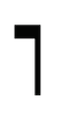 Raise by one 47-limit sixthtone (update 03.2025)
 -
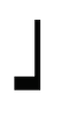 Lower by one 47-limit sixthtone (update 03.2025)


Old/deprecated symbols
-
 Combining lower by one 29-limit schisma (old)
 -
 Combining raise by one 29-limit schisma (old)
 -
 Combining lower by one 31-limit schisma (old)
 -
 Combining raise by one 31-limit schisma (old)
 -
 Combining lower by one 47-limit quartertone (old)
 -
 Combining raise by one 47-limit quartertone (old)


External links
- HEWM Notation (Helmholtz-Ellis-Wolf-Monzo) – Tonalsoft enyclopedia of microtonal music theory
- Plainsound Harmonic Space Calculator
- Glyphs in SMuFL
See also
Notes
- ↑ See Marc Sabat : Music & Writings.
- ↑ The recent March 2025 revision of HEJI changed the 47 comma from 752/729 to 48/47, which has yet to gain popular support. See The Helmholtz–Ellis JI Pitch Notation (HEJI).
| View • Talk • EditMusical notation | |
|---|---|
| Universal | Sagittal notation |
| Just intonation | Functional Just System • Ben Johnston's notation (Johnston–Copper notation) • Helmholtz–Ellis notation • Color notation |
| MOS scales | Diamond-mos notation • KISS notation (Quasi-diatonic MOS notation) |
| Temperaments | Chain-of-fifths notation • Stein–Zimmermann–Gould notation • Ups and downs notation • Syntonic–rastmic subchroma notation • Extended meantone notation • Fractional sharp notation |
See musical notation for a longer list of systems by category. See Category:Notation for the most complete, comprehensive list, but not sorted by category. | |