Making Microtonal Music is Easier Than You’d Think: Difference between revisions
formatting....always....formatting. |
yup. you know what I'm up to.....formatting. |
||
| Line 611: | Line 611: | ||
'''METHOD 4 - REMOVING THE FRETS ON A GUITAR AND PLAYING IT FRETLESS''' | '''METHOD 4 - REMOVING THE FRETS ON A GUITAR AND PLAYING IT FRETLESS''' | ||
I recommend doing this first on a cheap guitar. I used a Fender Squire that cost [https://amzn.to/2PRzIC0 150 bucks on Amazon]. And I don't recommend doing it on a Gibson. The binding on the sides of the fretboard will make this much harder to do, and you'll risk messing up the guitar. Fenders or Fender types are best. You can also just buy a Fender-type neck and use that, and then bolt on to an existing guitar to try this out. [https://amzn.to/2qFBR5M Here's one (without machine heads) for about 75 dollars]. And [https://amzn.to/2OAR6WR here is one for about 50 dollars]. Fender [https://amzn.to/2z0zRcQ machine heads are available here]. '''De-Fret me baby, all night long! ''' | I recommend doing this first on a cheap guitar. I used a Fender Squire that cost [https://amzn.to/2PRzIC0 150 bucks on Amazon]. And I don't recommend doing it on a Gibson. The binding on the sides of the fretboard will make this much harder to do, and you'll risk messing up the guitar. Fenders or Fender types are best. | ||
You can also just buy a Fender-type neck and use that, and then bolt on to an existing guitar to try this out. [https://amzn.to/2qFBR5M Here's one (without machine heads) for about 75 dollars]. And [https://amzn.to/2OAR6WR here is one for about 50 dollars]. Fender [https://amzn.to/2z0zRcQ machine heads are available here]. | |||
'''De-Fret me baby, all night long!''' | |||
--Wood filler. [https://amzn.to/2JS1A3D I use this]. It's light color, so where the frets were will stand out on the dark neck, to make it easier to play fretless. | |||
--Phillips head screwdriver | |||
--Soldering iron | |||
--Needle-nose pliers | |||
--Fine sandpaper | |||
--Plastic or wooden putty knife, or a metal kitchen butter knife | |||
If you want [https://amzn.to/2qFG0qk dark wood filler, use this]. | |||
Start by removing the strings from the guitar. | |||
Then unscrew the neck from the back. Do one screw, then another, going all the way round until the neck comes off. There may be a tiny bit of glue in there, you can just break the glue, there isn't much, so it shouldn't splinter the wood. | |||
[https://biptunia.com/wp-content/uploads/2019/03/20181027_143712_resized.jpg][[undefined|link=]][[:File:20181027 143712 resized-450x253.jpg|[[Image:20181027_143712_resized-450x253.jpg|link=|300x300px]]]] | |||
Next, heat up one of the frets with a soldering iron to melt the glue under frets. You will want to do this in a ventilated area, maybe even outside, and/or wear a good mask. Because it does produce a bit of vaporized glue smell, which probably isn't good for you. | |||
Also, keep pets and kids away from the soldering iron. And use a metal stand so the tip doesn't touch the table, and make sure you unplug it when you're done. | |||
Don't do this when you're wasted. The chance of burning yourself, your home, and/or messing up the guitar goes up the more drunk / high you are when you do this. And don't do it when you're tired. | |||
[https://biptunia.com/wp-content/uploads/2019/03/FretMelt.jpg][[undefined|link=]][[:File:FretMelt-301x350.jpg|[[Image:FretMelt-301x350.jpg|link=|300x300px]]]] | |||
Heat one end of the fret for about a minute, then pull that end up a little bit with some needle-nose pliers: | |||
[https://biptunia.com/wp-content/uploads/2019/03/20181024_024849_resized.jpg][[undefined|link=]][[:File:20181024 024849 resized-450x253.jpg|[[Image:20181024_024849_resized-450x253.jpg|link=|300x300px]]]] | |||
Then heat up the rest of the fret with the soldering iron, and gently but firmly pull out the rest of the fret. | |||
[https://biptunia.com/wp-content/uploads/2019/03/20181024_024912_resized.jpg][[undefined|link=]][[:File:20181024 024912 resized-450x253.jpg|[[Image:20181024_024912_resized-450x253.jpg|link=|300x300px]]]] | |||
Remove the rest of the frets. Doesn't matter which fret you start with and which you end with. You can even jump around on the neck if that makes it more interesting. But it is physically tiring and mentally tedious. If you get burnt out, unplug your soldering iron and do something else, or nap, and resume later when you're bright eyed and bushy tailed. Don't do it in a hurry, you'll mess up the guitar or yourself. | |||
[https://biptunia.com/wp-content/uploads/2019/03/20181024_024943_resized-1.jpg][[undefined|link=]][[:File:20181024 024943 resized-1-450x253.jpg|[[Image:20181024_024943_resized-1-450x253.jpg|link=|300x300px]]]] | |||
When all the frets are out, throw them away and lightly wet-sand the neck with fine sandpaper. Just use a few drops of water, and just sand a little bit....Only a touch to take off any burs produced by the fret removal, without grinding down the plane of the neck. When done, let the neck dry for an hour or more. Then use wood filler to fill in fret grooves, and any holes caused from pulling the hot frets. Push it in there with a wooden putty knife or a the dull side of a butter knife. Wipe off any excess. [https://biptunia.com/wp-content/uploads/2019/03/Staihing-guitar.jpg][[undefined|link=]][[:File:Staihing-guitar-450x253.jpg|[[Image:Staihing-guitar-450x253.jpg|link=|300x300px]]]] Let dry overnight, then sand with medium sand paper. Then sand with fine sandpaper. Then wet sand with fine sandpaper. Wipe with dry rag between each step. [https://biptunia.com/wp-content/uploads/2019/03/20181027_134042_resized.jpg][[undefined|link=]][[:File:20181027 134042 resized-450x253.jpg|[[Image:20181027_134042_resized-450x253.jpg|link=|300x300px]]]] Then screw the neck back on. While it's probably OK to use an electric drill bit screwdriver to remove the neck, I'd put it back on by hand, so you don't strip the threads. Do it the same way you took it off: Do one screw, then another, going all the way round until the neck goes back on evenly and tightly. Any remaining ultra-light roughness will be taken care of over time by bending strings. If you have ideas of staining the neck at this point, read your wood filler reviews on Amazon. Wood filler isn't as stainable as you'd think, even if it says it's stainable. And if you think you'll be good enough to play it accurately, especially microtonally, without seeing where the frets were, you must be an ''amazing'' musician. These guys are pretty good on fretted guitars, [https://www.youtube.com/watch?v=ewCZ-TWdx40 but pretty much suck at their first try playing] even 12 TET music on a fretless guitar. [https://www.youtube.com/watch?v=yshLWYjMijo Here's a guy blazing 12 TET on a fretless guitar], but he's a jazz cat, and the guitar has a metal neck, which gives more sustain. There are no fret markers on the neck, but there are on the side of the neck, facing him. When you play a fretless guitar, to play a note you'd normally hear in 12 TET music, '''you have to put your finger ''exactly'' where the fret would be'''. It's much harder than playing fretted. Because fretted, you can put your finger almost anywhere between the two frets. Not far enough back so there is buzzing, but you have a LOT more leeway in finger position on the fretboard while still being in tune. With a fretless instrument, your finger is the fret. This gets even more complicated with microtonal music. I recommend you first try playing your fretless guitar in 12 TET, playing along with a song you wrote, or know, and get to where you can play in tune. Then make a microtonal backing track with a VST and a MIDI keyboard, in a multiple or divisor of 12 edo. Like 6 edo. Or 24 edo. Play with that until it sounds good, then try it to a backing track of 7 edo. Or 5 edo. Or 13 edo. | |||
'''Fretless tips:''' So, put on NEW strings, plug into an amp, bend the strings until they stay in tune with a tuner, and start playing. It's harder to get sustain on a fretless guitar. Because with frets, you have the string firmly terminated at both ends by hard metal; the bridge one end, and the fret at the top. Whereas fretless, you have metal at the bridge, but flesh at the other end. It's not as precise, and some of your finger will be dampening the string while it's terminating the length. So playing with less flesh on the fretboard is better than a sloppy "whole finger tip mashed on the fretboard" technique. Thicker strings will give you more sustain, but will be harder to play. Some people put flat-wound strings on a fretless guitar, but then bending the string is pretty much out of the question. Especially if they're heavy flat-wound strings. Though on fretless, string bending isn't as needed, as you can just slide the note up a little while holding your finger down. You can experiment with lowering the action ([https://www.youtube.com/watch?v=XSRqdmXBSAQ video tutorial here]), that will make it easier to play and give you more sustain. But the strings will buzz if you go too low. And you'll lose intonation. Be sure to play all the way up and down the neck on all strings before you call this job done. I'm still getting used to playing the fretless. You can hear my first microtonal fretless guitar track in this song, '[https://biptunia.com/?p=3543 How to Survive a Nuclear Bomb]', starting at 5 minutes and 45 seconds. | '''Fretless tips:''' So, put on NEW strings, plug into an amp, bend the strings until they stay in tune with a tuner, and start playing. It's harder to get sustain on a fretless guitar. Because with frets, you have the string firmly terminated at both ends by hard metal; the bridge one end, and the fret at the top. Whereas fretless, you have metal at the bridge, but flesh at the other end. It's not as precise, and some of your finger will be dampening the string while it's terminating the length. So playing with less flesh on the fretboard is better than a sloppy "whole finger tip mashed on the fretboard" technique. Thicker strings will give you more sustain, but will be harder to play. Some people put flat-wound strings on a fretless guitar, but then bending the string is pretty much out of the question. Especially if they're heavy flat-wound strings. Though on fretless, string bending isn't as needed, as you can just slide the note up a little while holding your finger down. You can experiment with lowering the action ([https://www.youtube.com/watch?v=XSRqdmXBSAQ video tutorial here]), that will make it easier to play and give you more sustain. But the strings will buzz if you go too low. And you'll lose intonation. Be sure to play all the way up and down the neck on all strings before you call this job done. I'm still getting used to playing the fretless. You can hear my first microtonal fretless guitar track in this song, '[https://biptunia.com/?p=3543 How to Survive a Nuclear Bomb]', starting at 5 minutes and 45 seconds. | ||
Revision as of 21:29, 16 March 2019
(This is an archive of an article previously published on the Produce Like a Pro site.
Since it is a historical record, instead of editing, please first discuss suggested changes on the Talk page for this article. Especially if you find an error or a link that has gone 404.
I wrote this 9000-word article, Kite asked me to archive it on this wiki.
Might be a while to add all 41 images, and fix all the formatting from HTML, adding the paragraph breaks back in, etc. ...so please be patient.
Thank you.)

Welcome to this Tutorial Tuesdays article by Michael W. Dean, synth player in BipTunia. Author of $30 Music School.
PRO TIP: I'd recommend that while you read this article, you listen to this Microtonal Playlist on Spotify. It has almost 1500 microtonal songs by many artists in many microtonal tunings, and in many genres. It will make a lot of this make more sense. Because, you know, 'Writing about music is like dancing about architecture.' (Absolute origin of that quote is indeterminate.)
And put the Spotify playlist on Shuffle:

YOUR MICROTONAL CALL TO ACTION:
Wanna do one simple thing that will immediately break you out of any musical rut you can imagine? And it's one thing one that will, in some ways, make you feel like you're just starting to play music again, in a good way. But will incorporate the writing, playing and engineering skills you've already developed? Plus you can make some darned cool music that doesn't sound like everything else. Then make some microtonal music!
WHAT IS MICROTONAL MUSIC?
Microtonal Music is music that does not use the standard 12-tone equal temperament of 'normal' Western music. 12-Tone Equal Temperament, or 12 TET, does covers everything from later period classical music to the Sex Pistols. From Queen to Drake. From Chuck Berry to Radiohead, to almost certainly the project you have open right now in your DAW.
12-TET is also called 12-EDO. EDO means 'Equal Divisions of Octave.' 12-EDO has been rediscovered multiple times in the West and China, and was known even to Galileo. (Per Mike Battaglia) Galileo's father Vincenzo Galilei, was one of the first popular advocates for twelve-tone equal temperament. He wrote pieces for 12-EDO in 1584.
More on 12-EDO, and EDOs in general is here. Most western musicians make music in 12-EDO. Few well-known contemporary musicians use other systems, known collectively as microtonal systems.
The correct phrase is microtonal systems, but it is used interchangeably by many with the phrase microtonal temperaments. Also used are the terms microtonal scales, microtonal tunings, neither of which are as accurate as saying microtonal systems or microtonal temperaments.
Accurate, but less used, are the phrases "microtonal pitch systems", "microtonal harmonic languages", or " microtonal approaches to organizing pitch." A few exceptions to the 'not much microtonal music in the mainstream' rule are King Gizzard & The Lizard Wizard, who made a microtonal album called Flying Microtonal Banana. And Aphex Twin has used microtonal tunings here and there on albums as far back as 1994. Richard James (Aphex Twin) recently did some microtonal consulting for Korg, making microtonal tuning systems for the next Monologue hardware synth, which will have microtonal capacity.
WHERE DID ALL THIS COME FROM?
Before the mid-17th century, artists used a variety of tuning systems. Most common in Europe was a system called Meantone Temperament (or just Meantone) which sounded good in many keys, but out of tune in other keys.
While it's easy for a talented musician to re-tune into different microtonal systems on a fretless instrument like a violin, or a slide instrument like the trombone or slide guitar, playing different tunings on a mechanical keyboard requires completely re-tuning the instrument for every key change. With digital synths and VSTs, it's much easier now to re-tune on the fly. I'll cover this later in the article.
12-EDO (12-TET) is a compromise, where every key is slightly out of tune, but you can transpose from key to key without things sounding more out of tune.
We are used to 12 TET, so it sounds 'right' to us. And now, the old way of doing it, meantone, Just Intonation (JI), are considered part of microtonal music.
A friend of mine, on first making microtonal music, said "I really like this, but listening to it makes me feel funny."
That feeling passes and turns to glee after about 12-24 total hours of listening to microtonal music.
No single person invented meantone. But Italian music theorist and composer Gioseffo Zarlino (1517-1590) is commonly credited with nailing it down and making it more widespread. This was, of course, during the Renaissance, when a lot of good things happened. Zarlino was also a supporter of 12-EDO.
Microtonal music can sound calm or it can sound otherworldly, depending on the tuning(s) used, and the musician. It can also be in any genre.
There is neo-classical microtonal acoustic guitar, like Tolgahan Çoğulu. There are futurists like Carlo Serafini'who plays the very cool and freaky looking Opal Chameleon MIDI keyboard. It looks a bit like a Mahjong game in play crossed with a Lite-Brite. It's not cheap ($3,300 USD without any of the available custom features), but it's amazing if you can master it.

Then there's microtonal punk rock like the band Jock Tears. Well, pretty much only Jock Tears. They have cool tunes, a great look, and the best punk band name ever. (And I heard all the band names when I was in a punk band called The Beef People back in 1985.)
Naegleria Fowleri is microtonal heavy metal with a parrot singing!
There's microtonal blues, like Jon Catler.
I love this genre-busting analog video of Johnny Reinhard conducting a chamber choir of conch-shell players blowing some microtonal music....In a church, no less.
One of my favorite microtonal musicians is Brendan Byrnes, who makes music that's almost prog rock, but without 'too many notes for the royal ear.'
The microtonal music I make with BipTunia is some sort of synth pop.....with Phil Wormuth, an excellent poet (yes, there is such a thing) talking on many songs. It's hard to nail down, and is almost a different genre on every song. Plus a lot of it is a different microtonal tuning, or several microtonal tunings, in each song. It certainly doesn't sound like other music. No one I named here does.
Here's a web player for one of my records, with info on the microtonal tuning(s) used on each song.
There are so many good musicians making microtonal music that I can't list them all here. But most of them are in the Spotify playlist at the top of this article. And here's an alphabetic list of most of them, with links to each.
WHAT ABOUT WORLD MUSIC?
A lot of music on this planet is microtonal, you probably just don't hear a lot of it if you mostly listen to Western music.
Indian classical music is microtonal. Some sitars even have movable frets to change tunings for different pieces. A lot of traditional Asian music is microtonal. A lot of Middle Eastern music is microtonal.
To be clear, some of it is actually macrotonal, meaning it has less than 12 notes per octave. Microtonal is technically more than 12 notes per octave. Though the term is so commonly used for both that it's hardly incorrect to use on either.
A lot of traditional Asian music is pentatonic, being built off of macrotonal systems with 5 notes per octave. But that's commonly called microtonal. And sometimes microtonal music doesn't even have octaves. Or isn't an equal division of octaves, instead having some intervals larger or smaller in the same octave. Or the scale center can be divided over more than an octave.
ARE YOU EXPERIENCED WITH XEN?
Microtonal music pioneer Ivor Darreg (1917-1994) proposed the alternate term Xenharmonic Music, (pronounced like "Zen Harmonic"). Xenharmonic music, commonly just called "Xen" (pronounced "Zen"), includes microtonal, macrotonal, just intonation, non-octave systems...basically anything that is not 12 TET.
The term Xenharmonic comes from Xenos (Greek for foreign) and Xenia (Greek for hospitable). Xenharmonic is a good term, because microtonal music can often sound strange, but simultaneously welcoming. However, it's a strange term to people who are not microtonal musicians. It requires explanation. The term xenharmonic is largely only used by xenharmonic / microtonal musicians. Everyone else basically says microtonal.
All ancient music would be considered microtonal too. There are some ancient Greek tuning files included in the VSTs I make.
OK, LET'S GET XENHARMONIC
I'm going to cover four ways to get into microtonal music, involving increasing amounts of complexity / cost.
--The first method, using a free browser-based microtonal synthesizer
--The second method is using free VST plug-ins in your DAW. It's easy. Just add a MIDI keyboard + some musical talent.
--The third, changing the settings in the program Kontakt by Native Instruments, is a little more complex. It's still easy, but involves owning the sampling / instrument program Kontakt...the paid version, not the free player version. There's also info on micro-tuning synths in Reaktor by NI.
--The fourth is removing the frets on a guitar (!) and playing it fretless. I did this recently, and the result is very fun, if difficult to play at first.
--The fifth is more hardcore; buying a microtonal-fretted guitar that can only play in one microtonal tuning system.
Or for less money, you can buy a microtonal fretted neck to bolt on to a guitar you currently own.
METHOD 1: USING A FREE BROWSER-BASED MICROTONAL SYNTHESIZER
Check out the Offtonic synth site.

There you can pick a microtonal tuning (circled in red on the right of the image when expanded here), and play the notes with your computer QWERTY keyboard. (the thing you type articles on, not a musical keyboard.) It's even polyphonic.
This is a great resource; it's a way to dip your toe in the microtonal waters without even buying anything at all.
Unfortunately there are no other sound presets, so if you get discouraged by that, try Sevish's Scala Workshop synth. (Click to see bigger on images where you can't see detail):
[1]link=[[:File:ScalaWorkshop-450x215.jpg|File:ScalaWorkshop-450x215.jpg]]
![[1]](https://biptunia.com/wp-content/uploads/2019/03/scalaWorkshop.jpg)

Scala Workshop is also browser based, also polyphonic, and also played with your QWERTY keyboard. It's not as pretty as Offtonic, but so what? While it is a tiny bit more complex to use, it does have some good sounds, several sound options, + it can make, import, and export Scala files too. (More on Scala, and on Sevish, in a bit.) It even has the ability to add some delay.
Third in-browser choice is WebSynths: [2]
![[2]](https://biptunia.com/wp-content/uploads/2019/03/web-synths.png)
link=[[:File:Web-synths-450x215.png|File:Web-synths-450x215.png]]

This one is polyphonic, has support for different synth sounds, and can be played with a QWERTY keyboard. But it can also be played with a MIDI controller, if you're using Chrome, and you reload the page after plugging in the keyboard.
If you click on the image above to expand it, I've circled the place you change the tuning, and change MIDI settings. (Tip: most MIDI keyboards will work on MIDI channel 1.) I didn't see that at first. For some reason, I was scrolling through the other three menus.
This is a nice web synth with some microtonal capacity.
Another good browser-based resource to check out is the Xenharmonic Ear Trainer. XenEarTrainer guides you to improve microtonal pitch perception, music theory, and understanding of musical tuning.
OK, now that you've tried web synths, do you want to play microtonal music using heavy synth sounds in a DAW with a VST?:
METHOD 2: USING MICROTONAL VST PLUG-INS IN YOUR DAW
This is a place where Windows users are in a better position than Mac or Linux users, but there is some hope for the latter. I'm going to go into detail for Windows. Linux users should check out this article on Amsynth new version. That article is by Sevish, a very good microtonal musician. He exemplifies how a lot of people in the xenharmonic community really go out of their ways to help, and teach, others. For free. For the love of the xenharmonic game.
Check out his blog even if you're not on Linux. It's full of all sorts of cross-platform microtonal info.
Simple Microtonal Synth has a free Mac version.
Amsynth is a Linux and Mac software synth that supports microtonal tunings in the latest versions.
[3]link=[[:File:Amsynth-450x338.png|File:Amsynth-450x338.png]]
![[3]](https://biptunia.com/wp-content/uploads/2019/03/Amsynth.png)

SFORZANDO This is good, free, and works in Windows and Mac. It will even work in Pro Tools on a Mac, which very little microtonal software will do.
Sforzando is free from Plogue. It's not primarily microtonal, but can import .scl tuning files from Settings / Scale File / Set:
[4]link=[[:File:Sforzando-450x320.png|File:Sforzando-450x320.png]]
![[4]](https://biptunia.com/wp-content/uploads/2019/03/sforzando.png)

You can download a bunch of .scl files free, here. And here's a list of info on each of the files.
Or you can make .scl tuning files in Scala, a free open-source program explained a little further in this article.
Other than the VSTs that I make the only other Windows VST I regularly use for microtonal music is Sforzando.
Mac users can check out LinPlug Morphox. It costs, but there's a free working demo. It has some built-in microtonal settings. FYI, they've stopped developing new versions, but you can still get it for now. Mac users can also use the cool free soft synth Sforzando.
Here's a list of most of the microtonal software for all three main operating systems. Though the next two options I'll discuss here are the only ones that are stable, free, incredibly easy to use, and contain 5000+ tuning files built-in. (They're called tuning files, even though they are technically microtonal system files.)
For Windows user, here's what I use:
MICROTONAL POLY WORMS, and MICROTONAL POLYPHONIC SHINY DIRT
The microtonal Windows software a lot of people used to use was the VSTs from Xen-Arts. They've ceased development, their site is 404. And while these programs were great at one time, they crash 64-bit DAWs if you add more than one instance of them.
They also don't hold the microtonal system / tuning / scale you pick when you close your DAW. It often reverts each track to 12 TET when you close a project or close the DAW. (A few other VST synths have that issue also.)
And the Xen-Arts offerings they don't hold the microtonal system / tuning / scale you pick when you close your DAW. They often revert each track to 12 TET when you close a project or close the DAW. This issue is so crazy making and project-wrecking that it's a deal breaker for me. So I made my own VSTs. Mine keep their tunings, are robust, don't sound like anything else, plus they're also a lot of fun.
Both of my 32-bit Windows VSTs are synths, but both tested fine on 64-bit Reaper, and of course also on 32-bit Reaper. And tested as working well on Cubase, both 32-bit and 64-bit. And Acid. They should work on any 32-bit Windows DAW, and on many 64-bit Windows DAWs.
And now I've added some 64-bit VSTs, and one soft synth for Mac.
Reaper is my favorite and only recommended DAW. It's available for Windows, Mac, and is now in beta for Linux. Though my VSTs will only run on the Windows version (except my one Mac soft synth, Mac version of 'Simple Microtonal Synth', which will run in the Mac Reaper).
Reaper is free to try a full-featured version, and only 60 dollars US to register. (225 for commercial license, but it's the same program.) And it's updated far more often than the DAW you're probably using now.
Simple Microtonal Synth
link=[[:File:64bit-SMS-VST-main-333x350.png|File:64bit-SMS-VST-main-333x350.png]]

I made this to be the easiest to use microtonal VST, ever. Plus, it's free, and it's the only free 64-bit microtonal polyphonic VST. Get it here, and the simple directions are on that page too.
The 32-bit version works on Reaper 64-bit too, as well as most Windows 64-bit DAWs. There's also a 64-bit Windows version, and a Mac version. Both are free.
Microtonal Poly Worms
The first VST soft synth I made is called Microtonal Poly Worms. You can download it free, here.
link=[[:File:MtPw-v1point0-450x246.jpg|File:MtPw-v1point0-450x246.jpg]]

This is the more straightforward in sound of the two. It sounds a lot like an old Moog. Here's a YouTube video with a run-through of the sounds.
It has 5374 tuning files, (FAR more than any other VST or hardware synth, except for my other VST, which has the same tuning files.)
It has 64 presets. It's polyphonic, microtonal, free, easy to use, and robust.
I'm only going to do a tutorial for one of these two, because the installation and use of both is pretty much identical.
Also, both of them come with a collection of PDFs by Sevish about some of the various microtonal systems / tuning files included. They're technically deep, but easy to read, and even fun. He's a good teacher.
For a microtonal sampler, check out Simple Microtonal Sampler, 64-bit Windows. It's free.
Microtonal Polyphonic Shiny Dirt
Another free microtonal polyphonic VST I made is called Microtonal Polyphonic Shiny Dirt. You can download it here.
[5]link=[[:File:MicrotnalPolyShinyDirt-450x258.jpg|File:MicrotnalPolyShinyDirt-450x258.jpg]]
![[5]](https://biptunia.com/wp-content/uploads/2019/03/MicrotnalPolyShinyDirt.jpg)

Microtonal Polyphonic Shiny Dirt is a bit more experimental and freaky than Microtonal Poly Worms. It's been called "a very musical homage to circuit-bent analog synths.'
Plus, I set up the mod wheel to do something very different and very strange on every one of the 128 presets.
The album Microtonal Cats from Alpha-Centauri uses only these two synths, other than a couple drum samplers used for the drums.
Either of these synths can also do 12 TET. Just pick the 12 EDO tuning file.
For our purposes here, and largely in naming microtonal tuning systems in a board way, EDO is the same as TET. Though, as Joseph Monzo has pointed out, "TET refers to a temperament of Just Intonation in which unison-vectors are tempered out, whereas EDO or EDn (where n is an integer or ratio) simply refers to an equal division of the octave or n without any particular reference to JI or any of its theoretical underpinning. More links on the nuance of this are here with more here.)
GETTING STARTED WITH THESE WINDOWS VSTs
Unzip and put the folder
\MicrotonalPolyphonicShinyDirt
inside your DAW's VST folder. In 64-bit Reaper, the presets will show up in a second window, like this, with the pre-sets in a separate window:
[6]link=[[:File:Seperate-Window-450x191.jpg|File:Seperate-Window-450x191.jpg]]
![[6]](https://biptunia.com/wp-content/uploads/2019/03/seperate-Window.jpg)

(^ If the preset window on the right isn't wide enough to see all the preset names, you can grab either side of it with your mouse, hold down the left mouse button, and drag the window wider. This is at 2:20 in my second run-through video.)
If you can't even see the main colorful window with the kitties, click the button on the VST picker that says 'Show UI' (user interface):
[7]link=[[:File:Show-UI-450x196.png|File:Show-UI-450x196.png]]
![[7]](https://biptunia.com/wp-content/uploads/2019/03/show-UI.png)

GETTING TO KNOW Microtonal Polyphonic Shiny Dirt
SO....This VST has 128 presets, and 5,376 tunings (scale files, in .MTS format).
The first 32 pre-sets are microtonal. The rest are in normal tuning, but will retain the last microtonal tuning you used, until you set your own tuning (more on that in a moment).
Each preset has a different tuning, but you can use the picker to add any of the tunings to any of the presets. You can also make your own synth patches. And, if 5,376 tunings isn't enough, you can add your own tunings. They should be in .MTS file format, put into the
\MicrotonalPolyphonicShinyDirt
folder inside your VST folder.
The order of .MTS files in our presets are set up somewhat randomly, to encourage experimentation. But you can stop using the set tunings in a given preset at any time, and pick your own. You do this by clicking on the file picker near the bottom right, on the 'CHOOSE MTS TUNING FILES' section at the bottom, and picking any of the 5,376 scales.
(Check out Sevish's Resources for Microtonal Musicians page.)
If you read about a tuning you like and want to try it, you can click the file picker icon in the bottom right of the User Interface, circled here in blue:
link=[[:File:Search-name-of-file-450x299.jpg|File:Search-name-of-file-450x299.jpg]]

This will open up the list of tuning .MTS files. From there you can just go down the list and try different scales, or you can find specific ones; there is a search function where you can type the scale name. It will bring up your result or results:
[[:File:Search-name-of-file-450x299.jpg|File:Search-name-of-file-450x299.jpg]]
From there, click on the file icon to use the scale. (Where it says hulen_33' in the above image. But that will be replaced by the name you searched.)
Tip: If you want to play in typical western 12-tone equal temperament, pick setting 33, called 'NOT MICROTONAL.'
------------------------------
WHEEL CHOICE PANEL
PM DEPTH Zzerp
INPUT 1 Newman
PITCH Moo
RESONANCE Rez
SIGNAL (Moog, signal – not on panel)
PHASE MOD Subtle
MODULATION fBack - (is delay feedback.)
PULSE WIDTH LFO drop down, bottom choice.
---
Microtonal Polyphonic Shiny Dirt has a cool frequency meter. This is a diagnostic tool used while making a VST, but usually removed before outputting for the public. I like it, so left it in. It's stoney and groovy. But they also teach you a bit about how this all works, and what audio synthesis actually is.
The mod wheel on Microtonal Polyphonic Shiny Dirt is unique. It controls a combination of sustain, phase mod, and pulse width. It's somewhat more subtle than many expect from a usual mod wheel, but very useful in creating a shimmer or vibrato by hand.
The mod wheel will do more on some presets and patches than on others.
And will do more in some octaves than on others. We recommend you try patches and tunings you like in different octaves as well. And with single notes, two- and three-note chords, and also try chords with more notes.
This synth will also produce very interesting results with an arpeggiator. Try it!
The pitch wheel on your MIDI controller will control pitch. The amount you can bend with it is different on some presets, and can be changed manually with the 'Pitch Wheel' switch.
Alright! Make some music then let's get into some maths and a free tool for visualizing said maths.
SCALA IS A SWISS ARMY KNIFE FOR MICROTONAL TUNING FILES AND UNDERSTANDING SCALES IN DEPTH
Note: My VSTs use .MTS tuning files, not .scl files.
But in Scala, you can convert .scl to .MTS, but not the other way around. It can export .MTS files, but cannot import them.
Get Scala here. Scala is free software (that's also zero cost) for making and analyzing tunings. Also good for making machine-readable tuning files, and converting one format of tuning files to another. Scala is GUI but also command line with some features.
Make sure you follow the directions on the website when installing it. There are some dependencies you will likely have to download and install before you install Scala.
Scala is also great for analyzing microtonal tuning systems, if you want to delve into the maths. Just create or import a scale file, then try the different options from the choice at the top of the menu file. Or you can just hit F7, F8, and F9 keys on your computer keyboard.
[8]link=[[:File:Scala-features-1-450x185.jpg|File:Scala-features-1-450x185.jpg]]
![[8]](https://biptunia.com/wp-content/uploads/2019/03/scala-features-1.jpg)

Note that you can play a scale in Scala with your mouse, to get a feel for it. You can do this in Chromatic Clavier (F4 key), or Tonality Diamond (CTRL + F9) + sound button. Also in Triad Player (F9) and a few other of the functions. Sounds are basic, Piano, Organ, etc, but are not bad sounding, and you can pick from a few sounds.
There are whispered tales that you can actually use Scala to re-tune some hardware or software synths live on the fly, but I've never seen it done, and the description of the process is daunting. If someone can put that into a no-brainer VST, they'll make dozens of dollars. At least. Hey, I might pay 24 dollars for that if it existed.
Text and pix tutorial by Sevish: How to create a .tun file in Scala (also has info on exporting to other scale formats.)
Video tutorial by Sevish: How to make and export microtonal tuning files using Scala
Scala Tutorial on bulk conversions in from .scl to .MTS (or .scl to .tun, etc.) This is something I wrote after having to figure out how to do that for making the .MTS files for my VST synths.
Below is a small amount of the info Scala returns on one scale. Before I scare you off with math you don't need to know in order to play microtonal music (though it helps), here is some very useful info:
PRO TIP: Don't be afraid to experiment with microtonal music if you don't yet understand the math.
While eventually learning the math is good, and we included resources for that. And with this VST, no math is even needed to start making cool microtonal music.
In fact, '''an ability to create compelling music with a tiny bit of understanding of microtones will go much further than the opposite.
OK, here's some of the maths revealed in Scala on one of the 5374 tuning files included with my VSTs (Bohlen-Pierce with two tones altered by minor BP diesis, slightly more equal):
(BEGIN SCARY MATHS):
0: 1/1 0.000000 unison, perfect prime
1: 49/45 147.428097 BP minor semitone
2: 25/21 301.846520 BP second, quasi-equal minor third
3: 9/7 435.084095 septimal major third, BP third
4: 7/5 582.512193 septimal or Huygens' tritone, BP fourth
5: 75/49 736.930616 BP fifth
6: 5/3 884.358713 major sixth, BP sixth
7: 9/5 1017.596288 just minor seventh, BP seventh
8: 49/25 1165.024385 BP eighth
9: 15/7 1319.442808 septimal minor ninth, BP ninth
10: 7/3 1466.870906 minimal tenth, BP tenth
11: 63/25 1600.108480 quasi-equal major tenth, BP eleventh
12: 135/49 1754.526904
13: 3/1 1901.955001 perfect 12th
Number of notes : 13
-- Interval properties --
Smallest interval : 27/25, 133.2376 cents, class 1
Average step (divided formal octave): 146.3042 cents
Largest one step interval : 375/343, 154.4184 cents
Average / Smallest step : 1.098070
Largest / Average step : 1.055461
Largest / Smallest step : 1.158971
Median interval of one step : 49/45, 147.4281 cents, amount: 6
Most common interval of one step : 49/45, 147.4281 cents, amount: 6
Least squares average step : 146.20906 cents, oct.: 1900.71781 cents
Scale is strictly proper
Interval pattern alph. order: ABCABACABACBA
Interval pattern size order : MLSMLMSMLMSLM
Scale is a Constant Structure, by a margin of 112.05673 cents
Scale diversity : 0.283864
Rothenberg stability : 1.000000 = 1
Lumma stability : 0.866364
Number of different interval sizes : 38 = 3.16667 / class
Number of one step interval sizes : 3
Highest interval variety : 4
Mean interval variety : 3.16667 = 19/6
Median interval variety : 3
Lowest interval variety : 3
Smallest interval difference : 16875/16807, 6.9903 cents
Most common intervals : 7/5, 582.5122 cents & inv., amount: 10
Most common triad is 0.0 582.512 1319.443 cents, amount: 7
Number of recognisable fifths : 2, average 715.7498 cents
Number of appreciable fifths : 0
Number of recognisable fourths : 0
Best fifths form a closed circle
Best major thirds form a closed circle
Best minor thirds form a closed circle
Formal octave complements present : 13 = 100.0000%
2/1 octave complements present : 0 = 0.0000%
Limited transpositions with margin 21.1808 cents:
1 2 3 4 5 6 7 8 9 10 11 12
Limited inverse transpositions with margin 21.1808 cents:
1 2 3 4 5 6 7 8 9 10 11 12
Inversional symmetry on degrees :0
Inversional symmetry on intervals :6-7
-- Rational properties --
Prime limit : 7
Odd number limit : 6075 (O: 6075 U: 2401)
Highest odd numerator or denominator: 135
Scale harmonicity : 0.012488
Average absolute harmonicity : 0.078049
Specific harmonicity : 0.072166
Fundamental : 1/11025, -13.4285 octaves, 0.0237 Hz.
Guide tone : 33075, 15.0135 octaves, 8653265.572 Hz.
Exponens Consonantiae : 3.646519E+08, 28.44194 octaves
Euler's gradus suavitatis : 51
Sum of Mann's harmonic distance : 348.0, average 26.76923
Mersenne's string divisions : too high to compute
Sum of van Prooijen's expressibility: 16.53393, average 1.27184
Sum of Tenney's harmonic distance : 29.72801, average 2.28677
Vogel's harmonic complexity : 31.61538
Wille's k value : 16537
Wilson's harmonic complexity : 63
Rectangular lattice diameter : 13
Triangular lattice diameter : 7
Lattice compactness : 278.65409, average 3.06213
Lattice compactness (without 2's) : 278.65409, average 3.06213
Number of different primes : 3
Prime exponents' range, average, count, tones@limit:
3: -2 .. 3 0.53846 17 1
5: -2 .. 2 0.00000 14 2
7: -2 .. 2 0.00000 14 10
Average exponent except 2's : 7 / 13 = 0.53846
Average absolute exponent except 2's: 45 / 13 = 3.46154
Scale is JI-epimorphic in non-monotonic order: <13 17 24|
Scale is JI-epimorphic: <13 19 23| = standard
Scale is JI-epimorphic in non-monotonic order: <13 20 25|
Scale is JI-epimorphic in non-monotonic order: <13 21 22|
Scale is JI-epimorphic in non-monotonic order: <13 21 23|
(END SCARY MATHS.)
If you want a simple non-scary into to the maths of xen, check out this video.
METHOD 3: MICROTONAL TUNINGS IN KONTAKT (and even a little bit in Reaktor)
Kontakt is a very robust sampler, that has a bunch of very real sounding instrument samples. You can basically play a whole orchestra or rock band or most well known classic synths in it. And I really doubt more than about ' of 1% of people could tell the difference. And any who could tell would likely tell based on the playing style rather than the sound.
You can also import any sound into Kontakt and play it on a keyboard. A lot of software can do this, but Kontakt is very tweakable with what you do with the sound. There are also a lot of tutorials online for most anything.
(Thank you Chris Vaisvil for this trick. I've just simplified his instructions, and made them easier to find.)
With this technique, you can't import tuning files. But you can play any instrument that comes with Kontakt in any equal temperament tuning. You can also do that with any sound you import, including human voice samples. I do that a lot lately.
First, open Kontakt and pick an instrument.
[9]link=[[:File:Kontkt-1a-298x350.jpg|File:Kontkt-1a-298x350.jpg]]
![[9]](https://biptunia.com/wp-content/uploads/2019/03/kontkt-1a.jpg)

NOTE: Kontakt is a stand-alone program, but some people don't know that is also comes with a VST version, that will work inside your DAW. Here's a video tutorial I made on that a while back.
It's for an old version of Cubase, but these instructions should work in any DAW if you can't figure it out on your own. Note that some of the comments on that video are people saying they didn't know it could be used as a VST.
Then click on the little wrench (or spanner if you're in the UK) and the click on Script Editor:
[10]link=[[:File:Konk-2-450x342.png|File:Konk-2-450x342.png]]
![[10]](https://biptunia.com/wp-content/uploads/2019/03/konk-2.png)

Now go to Preset / Factory / Tuning / Notes Per Octave
[11]link=[[:File:Kontakt-4-450x338.jpg|File:Kontakt-4-450x338.jpg]]
![[11]](https://biptunia.com/wp-content/uploads/2019/03/Kontakt-4.jpg)

Finally, set the number of notes you want per octave. Here I've set it to 53 notes per octave. This will produce the tuning system of 53 TET (53 edo).
[12]link=[[:File:Np0-450x294.png|File:Np0-450x294.png]]
![[12]](https://biptunia.com/wp-content/uploads/2019/03/np0.png)

You can set it to anything between 2 edo, and 1200 edo. Though no human could discern adjacent notes at 1200. Most people can't do it at much more than about 53 edo. I can discern them at 120 edo, and I have a song that's partially in 120 TET.
Then hit the wrench icon to go back to the instrument controls, and start playing.
When you go to close the instrument (or close Kontakt) you will be prompted to save the instrument. If you save it, it will be in that tuning when you re-open it.
You should do this if you're putting it onto a project in your DAW.
TIP: when you first start with microtonal music, I recommend using TETs / EDOs less than 12. Pretty much anything sounds good in 5 edo, 7 TET, 8 TET, 9 edo, etc.
MICROTONAL TUNINGS IN REAKTOR
It's not as easy to do non-12 TET equal temperament in Native Instruments' other flagship synth product, Reaktor. Reaktor is a graphical modular software music studio, that comes with a bunch of pre-built synths and samplers, but also allows users to build and share new instruments.
The only Reaktor microtonal synth I've found is this re-mix of the default Reaktor synth, SoundForum, with microtonal capabilities added. The direct download is hard to find in that article, the zip download is here.
SoundForum, in this iteration, has an additional knob added to pick the number of notes per octave:
[13]link=[[:File:Sforum.jpg|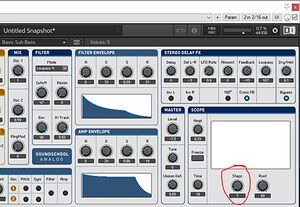 ]]
]]
![[13]](https://biptunia.com/wp-content/uploads/2019/03/sforum.jpg)
If anyone who is good at remixing Reaktor ensembles wants to isolate that module, and make a new module that will modify any other module in Reaktor, let me know and I'll add it here. I make my synths in SynthEdit.
Also check out Reaktor Microtuner, a free block for Reaktor to re-tune any instrument in Reaktor. Requires Reaktor 6.1.1, (R35), or later:
[14]link=[[:File:4665509 7855.microtunerimage2-450x216.png|File:4665509 7855.microtunerimage2-450x216.png]]
![[14]](https://biptunia.com/wp-content/uploads/2019/03/4665509_7855.microtunerimage2.png)

For info on using Blocks in Reaktor, check out this video.
Finally, I would be remiss in the soft synth list if I did not mention this Microtonal Rhodes piano VST: EP-MK1:
[15]link=[[:File:Epk-450x259.jpg|File:Epk-450x259.jpg]]
![[15]](https://biptunia.com/wp-content/uploads/2019/03/epk.jpg)

It works for Linux, Windows and Mac. (Files for all are in the same download zip).
The EP-MK1 only has one sound (electric piano), but does it well. Is a little muddy (so are actual physical Rhodes electric pianos!), but sounds great if you add a gentle high-end boost before a little bit of reverb.
It cannot import tuning files, but can play any EDO or even ED-non octave. And can do something few microtonal VSTs can do: it can play non-integer EDOs (!). Try entering something like
15.7
into the
# of DIVISIONS
field and hit Enter.
METHOD 4 - REMOVING THE FRETS ON A GUITAR AND PLAYING IT FRETLESS
I recommend doing this first on a cheap guitar. I used a Fender Squire that cost 150 bucks on Amazon. And I don't recommend doing it on a Gibson. The binding on the sides of the fretboard will make this much harder to do, and you'll risk messing up the guitar. Fenders or Fender types are best.
You can also just buy a Fender-type neck and use that, and then bolt on to an existing guitar to try this out. Here's one (without machine heads) for about 75 dollars. And here is one for about 50 dollars. Fender machine heads are available here.
De-Fret me baby, all night long!
--Wood filler. I use this. It's light color, so where the frets were will stand out on the dark neck, to make it easier to play fretless.
--Phillips head screwdriver
--Soldering iron
--Needle-nose pliers
--Fine sandpaper
--Plastic or wooden putty knife, or a metal kitchen butter knife
If you want dark wood filler, use this.
Start by removing the strings from the guitar.
Then unscrew the neck from the back. Do one screw, then another, going all the way round until the neck comes off. There may be a tiny bit of glue in there, you can just break the glue, there isn't much, so it shouldn't splinter the wood.
[16]link=[[:File:20181027 143712 resized-450x253.jpg|File:20181027 143712 resized-450x253.jpg]]
![[16]](https://biptunia.com/wp-content/uploads/2019/03/20181027_143712_resized.jpg)

Next, heat up one of the frets with a soldering iron to melt the glue under frets. You will want to do this in a ventilated area, maybe even outside, and/or wear a good mask. Because it does produce a bit of vaporized glue smell, which probably isn't good for you.
Also, keep pets and kids away from the soldering iron. And use a metal stand so the tip doesn't touch the table, and make sure you unplug it when you're done.
Don't do this when you're wasted. The chance of burning yourself, your home, and/or messing up the guitar goes up the more drunk / high you are when you do this. And don't do it when you're tired.
[17]link=[[:File:FretMelt-301x350.jpg|File:FretMelt-301x350.jpg]]
![[17]](https://biptunia.com/wp-content/uploads/2019/03/FretMelt.jpg)

Heat one end of the fret for about a minute, then pull that end up a little bit with some needle-nose pliers:
[18]link=[[:File:20181024 024849 resized-450x253.jpg|File:20181024 024849 resized-450x253.jpg]]
![[18]](https://biptunia.com/wp-content/uploads/2019/03/20181024_024849_resized.jpg)

Then heat up the rest of the fret with the soldering iron, and gently but firmly pull out the rest of the fret.
[19]link=[[:File:20181024 024912 resized-450x253.jpg|File:20181024 024912 resized-450x253.jpg]]
![[19]](https://biptunia.com/wp-content/uploads/2019/03/20181024_024912_resized.jpg)

Remove the rest of the frets. Doesn't matter which fret you start with and which you end with. You can even jump around on the neck if that makes it more interesting. But it is physically tiring and mentally tedious. If you get burnt out, unplug your soldering iron and do something else, or nap, and resume later when you're bright eyed and bushy tailed. Don't do it in a hurry, you'll mess up the guitar or yourself.
[20]link=[[:File:20181024 024943 resized-1-450x253.jpg|File:20181024 024943 resized-1-450x253.jpg]]
![[20]](https://biptunia.com/wp-content/uploads/2019/03/20181024_024943_resized-1.jpg)

When all the frets are out, throw them away and lightly wet-sand the neck with fine sandpaper. Just use a few drops of water, and just sand a little bit....Only a touch to take off any burs produced by the fret removal, without grinding down the plane of the neck. When done, let the neck dry for an hour or more. Then use wood filler to fill in fret grooves, and any holes caused from pulling the hot frets. Push it in there with a wooden putty knife or a the dull side of a butter knife. Wipe off any excess. [21]link=[[:File:Staihing-guitar-450x253.jpg|File:Staihing-guitar-450x253.jpg]] Let dry overnight, then sand with medium sand paper. Then sand with fine sandpaper. Then wet sand with fine sandpaper. Wipe with dry rag between each step. [22]link=[[:File:20181027 134042 resized-450x253.jpg|File:20181027 134042 resized-450x253.jpg]] Then screw the neck back on. While it's probably OK to use an electric drill bit screwdriver to remove the neck, I'd put it back on by hand, so you don't strip the threads. Do it the same way you took it off: Do one screw, then another, going all the way round until the neck goes back on evenly and tightly. Any remaining ultra-light roughness will be taken care of over time by bending strings. If you have ideas of staining the neck at this point, read your wood filler reviews on Amazon. Wood filler isn't as stainable as you'd think, even if it says it's stainable. And if you think you'll be good enough to play it accurately, especially microtonally, without seeing where the frets were, you must be an amazing musician. These guys are pretty good on fretted guitars, but pretty much suck at their first try playing even 12 TET music on a fretless guitar. Here's a guy blazing 12 TET on a fretless guitar, but he's a jazz cat, and the guitar has a metal neck, which gives more sustain. There are no fret markers on the neck, but there are on the side of the neck, facing him. When you play a fretless guitar, to play a note you'd normally hear in 12 TET music, you have to put your finger exactly where the fret would be. It's much harder than playing fretted. Because fretted, you can put your finger almost anywhere between the two frets. Not far enough back so there is buzzing, but you have a LOT more leeway in finger position on the fretboard while still being in tune. With a fretless instrument, your finger is the fret. This gets even more complicated with microtonal music. I recommend you first try playing your fretless guitar in 12 TET, playing along with a song you wrote, or know, and get to where you can play in tune. Then make a microtonal backing track with a VST and a MIDI keyboard, in a multiple or divisor of 12 edo. Like 6 edo. Or 24 edo. Play with that until it sounds good, then try it to a backing track of 7 edo. Or 5 edo. Or 13 edo.
![[21]](https://biptunia.com/wp-content/uploads/2019/03/Staihing-guitar.jpg)

![[22]](https://biptunia.com/wp-content/uploads/2019/03/20181027_134042_resized.jpg)

Fretless tips: So, put on NEW strings, plug into an amp, bend the strings until they stay in tune with a tuner, and start playing. It's harder to get sustain on a fretless guitar. Because with frets, you have the string firmly terminated at both ends by hard metal; the bridge one end, and the fret at the top. Whereas fretless, you have metal at the bridge, but flesh at the other end. It's not as precise, and some of your finger will be dampening the string while it's terminating the length. So playing with less flesh on the fretboard is better than a sloppy "whole finger tip mashed on the fretboard" technique. Thicker strings will give you more sustain, but will be harder to play. Some people put flat-wound strings on a fretless guitar, but then bending the string is pretty much out of the question. Especially if they're heavy flat-wound strings. Though on fretless, string bending isn't as needed, as you can just slide the note up a little while holding your finger down. You can experiment with lowering the action (video tutorial here), that will make it easier to play and give you more sustain. But the strings will buzz if you go too low. And you'll lose intonation. Be sure to play all the way up and down the neck on all strings before you call this job done. I'm still getting used to playing the fretless. You can hear my first microtonal fretless guitar track in this song, 'How to Survive a Nuclear Bomb', starting at 5 minutes and 45 seconds.
METHOD 5 - BUYING A MICROTONAL-FRETTED GUITAR OR GUITAR NECK
Tolgahan 'oÄŸulu makes his own microtonal nylon string acoustic guitars, but they're too expensive to produce for others yet. Though he's working on it. [23]link=[[:File:Tolgahan Cogulu-150dpi-450x300.jpg|File:Tolgahan Cogulu-150dpi-450x300.jpg]] But if you play electric guitar, Ron Sword has a small company in in Florida, USA called Metatonal Music. There he makes and sells microtonal guitars. They're largely stock guitars with his microtonal frets added. [24]link=[[:File:Blackwhitestrats-437x350.jpg|File:Blackwhitestrats-437x350.jpg]] [25]link=[[:File:Ron-s-coronado-guitar-450x194.jpg|File:Ron-s-coronado-guitar-450x194.jpg]] You can try making one yourself, but you better be damn good at math, and a good luthier to boot. Because it's not as easy as it sounds. Though if you do try it yourself, here's a site for calculating fret spacing for different scales. The site can import scala files too. His wares work correctly tuned out of the box. Though once you play it a bit, you'll want to get some fret leveling work and general setup done by a good local guitar tech. Many music stores have one, or can recommend a good one. Use a good one. A lot of people claim to be able to do this work, but not everyone who claims can actually do it. Ron also offers microtonal bolt-on necks, and also will re-fret your cherished guitar to convert it to microtonal. Keep in mind, you'd need a different guitar (or neck) for each microtonal system. If you wanted to have 5000 microtonal tuning systems available to change at a whim like you can have with my free VSTs, you'd need 5000 guitars. Or at least 5000 necks, and a few roadies to quickly bolt them on and off, without stripping the threads. But some people just love guitar more than keyboards, and there is something insanely cool about playing a microtonal guitar. It's somehow feels like you're traversing the past and the future at the same time. Ron Sword does good, if quick 'n' dirty work to provide the electric guitars used by many microtonal bands that have guitars. The list includes Noah from Jock Tears, plus the wonderful Mercury Tree & Cryptic Ruse. (Mercury Tree & Cryptic Ruse are two separate groups, but they did some stellar collaborations that you can listen to here.) Ron also has microtonal scale charts for his guitars on his site, to help you figure out what the heck to do with these things. If you want to spend more money and get higher quality microtonal guitars, Eiichi Ishikawa in Vancouver, Canada makes good microtonal guitars. He's been making guitars (not just microtonal) longer than Ron's been alive. lol. Eiichi does work on Angus Young from AC-DC's (non-microtonal) guitars. Spencer Hargreaves from Jock Tears uses microtonal guitars from Eiichi Ishikawa, and loves them. Spencer has also played Ron's guitars and says they're great.
![[23]](https://biptunia.com/wp-content/uploads/2019/03/Tolgahan_Cogulu-150dpi.jpg)

![[24]](https://biptunia.com/wp-content/uploads/2019/03/blackwhitestrats.jpg)

![[25]](https://biptunia.com/wp-content/uploads/2019/03/ron-s-coronado-guitar.jpg)

Keep in mind that you may want to buy a guitar from someone in your own country. Because you may be paying a lot of import duty if not. I bought some synthesizer parts from Belgium a while back, the USA (where I live) charged me 48% of the retail price to get my purchase!! That's on top of what I paid for the parts. The price on guitars may be similar. Though you could email a maker to ask about that, they'd likely know.
Jon Catler, in the USA, makes quality microtonal guitars. And and maybe have to wait to get them. Check out Jon Catler's work at Freenote. [26]link=[[:File:Catler 12TUP-234x350.jpg|File:Catler 12TUP-234x350.jpg]] Jon also sells high-quality microtonal guitar necks, and great fretless guitars. Brendan Byrnes has a Freenote 12-Tone Plus guitar from Jon Catler. (Brendan also has a 22 TET guitar and a 22-TET bass from Ron Sword.)
![[26]](https://biptunia.com/wp-content/uploads/2019/03/Catler_12TUP.jpg)

"12-Tone Plus lets you keep the standard 12 frets per octave in place while adding 12 new frets. These new frets are 7th, 11th, and 13th harmonics straight from the Harmonic Series. Pure harmony, shimmering dissonance, or anything in between, these notes will open new musical doors for any player in any genre."
Matthew Dolmage, in Canada, makes some gorgeous microtonal (and non-microtonal) guitars. Here is the Dolmage Designs Etsy, and here's his Facebook. [27]link=[[:File:Sdfg-450x300.jpg|File:Sdfg-450x300.jpg]] Ben Spees from Mercury Tree has a Dolmage Designs microtonal guitar neck, and loves it. If you want the top of the line, have a bunch to spend, and don't mind waiting several months for something custom, amazing, and microtonal, talk to Dan Memory at Oni Guitars in Australia. Pix here. Contact info is here. [28]link=[[:File:Burl-450x306.png|File:Burl-450x306.png]] [29]link=[[:File:Oni2-450x315.png|File:Oni2-450x315.png]] [30]link=[[:File:Oni-2-450x250.png|File:Oni-2-450x250.png]] Eastwood Guitars makes microtonal models: [31]link=[[:File:Phase 4-3banner-450x256.jpg|File:Phase 4-3banner-450x256.jpg]] Starrett Guitars makes some real beauties too, and does custom microtonal work. [32]link=[[:File:Pic07-450x148.jpg|File:Pic07-450x148.jpg]] FYI, There's a microtonal guitar thread on Reddit. And Neil Haverstick has some good articles and books on microtonal instruments in specific, and microtonal music in general: [33]link=[[:File:45710347 10156833714929282 3451817773586448384 n-380x350.jpg|File:45710347 10156833714929282 3451817773586448384 n-380x350.jpg]] Other than my fretless guitar, I mainly use guitar sounds in Kontakt played with a MIDI keyboard and re-tuned to non-12 TETs with the technique enumerated above. But the real deal is having a good microtonal fretted guitar, and learning to use it.
![[27]](https://biptunia.com/wp-content/uploads/2019/03/sdfg.jpg)

![[28]](https://biptunia.com/wp-content/uploads/2019/03/burl.png)

![[29]](https://biptunia.com/wp-content/uploads/2019/03/Oni2.png)

![[30]](https://biptunia.com/wp-content/uploads/2019/03/oni-2.png)

![[31]](https://biptunia.com/wp-content/uploads/2019/03/Phase_4-3banner.jpg)

![[32]](https://biptunia.com/wp-content/uploads/2019/03/pic07.jpg)

![[33]](https://biptunia.com/wp-content/uploads/2019/03/45710347_10156833714929282_3451817773586448384_n.jpg)

CLOSING ARGUMENTS
Microtonal music is a whole new world to fall into. It's relatively simple to dabble in it. And if you're good at 12 TET music, it doesn't take long to sound good in xen. But the wormholes you can fall down are incredibly deep and varied. It's a synthesis of art and deep math that is almost mystical to some people, far more so than ordinary everyday boring old 12 TET music. Microtonal music is a great way to rocket yourself out of a rut, go to the next level, in parallel universes you didn't even know existed previously. It's a great path for musicians who have an insatiable thirst for the new, and for information. Plus it can sound darned good too. You don't have to completely "go microtonal." Some microtonal musicians are exclusively microtonal, some almost to a macho "I'm different!" extent. But many of the better ones aren't exclusively microtonal, or consider themselves musicians first, and microtonal musicians a close second. I think that's a healthy and honest attitude. Personally, the first 7 BipTunia records were 12 edo. VERY strange 12 edo, but 12 edo. The 8th BipTunia record was 90% microtonal. The next one we're working on now will likely be about 50% to 60% microtonal, and I think that's likely where I'll stay going forth. I will make an informed guess that microtonal music is something that about 1 in 10,000 musicians who grew up in the west, or in a western tradition, do on a regular basis. At least the number is very likely somewhere in that magnitude. But xen is going to become more common, because it's good. So it's a fine thing to get skilled at doing if you want to stand out.
RECOMMENDED MICROTONAL RESOURCES
The Xenharmonic Alliance Facebook group that's a continuation of an in-person group co-founded by Ivor Darreg in the 1970s. The pre-Internet iteration also functioned through the postal mail, sending cassette tapes back and forth (!) The main reason there are any recordings of Ivor actually playing music himself at all is because Johnny Reinhard kept tapes that were personally given to him by Ivor, and Johnny recently started putting them online. Ivor died a few months after the World Wide Web started, and before most people knew it existed. But Ivor was on a mission, and asked Johnny to share the music. So when the technology became ubiquitous, Ivor now lives again in the ears of people who weren't even alive when Ivor was playing gigs with his crazy homemade instruments.
The Xenharmonic Wiki Very in-depth educational resource from the Xenharmonic Alliance.
Microtonalitaly Facebook group Good people, good info, good stuff.
Microtonal Music and Tuning Theory Facebook group. Exactly what it sounds like. Posting detailed questions and discussions of xen theory and maths is far more welcome here than on the other groups. In fact, there some people on this group who are pure music theorists. And very good pure music theorists. That is, they don't actually make microtonal music (or any music), but know more about the hum of this universe than many musicians. But others in this group also make music.
Xenharmonic Musical Instrument Makers and Designers Facebook group. Exactly what it sounds like. Mostly hardware, but it's not unwelcome to post or ask about software xen instrument making. I've done it.
American Festival of Microtonal Music Long-running org for the furtherance of microtonal music.
[34]link=[[:File:Stick-450x315.jpg|File:Stick-450x315.jpg]] Want a free high-quality vinyl BipTunia bumper sticker or 3" circle sticker? BipTunia is a cool music project that does a bunch of microtonal stuff. is nifty and I want to help spread the word Send me an email here. I'll send one of each to anyone who wants one, anywhere in the world, and then I'll delete the address you sent me.
![[34]](https://biptunia.com/wp-content/uploads/2019/03/stick.jpg)

LEGAL: VST is a trademark of Steinberg Media Technologies GmbH, registered in Europe and other countries. BipTunia Synths has been licensed for VST SDK use by Steinberg. Agreement countersigned by Steinberg on August 23, 2018.